

For decades, property commentators have repeated the same advice. “If you want strong capital growth, buy in suburbs with high population growth.” It sounds logical. More people should mean more demand. More demand should mean higher prices.
But when you dig deeper into what population growth actually measures, and what it fails to measure, the story is very different. In fact, in many cases high population growth is not a sign of rising demand at all.
It is a sign of rising supply. This is where many investors get misled. And this is why population growth is one of the most overrated indicators in Australian property research.
How Property Prices Really Change
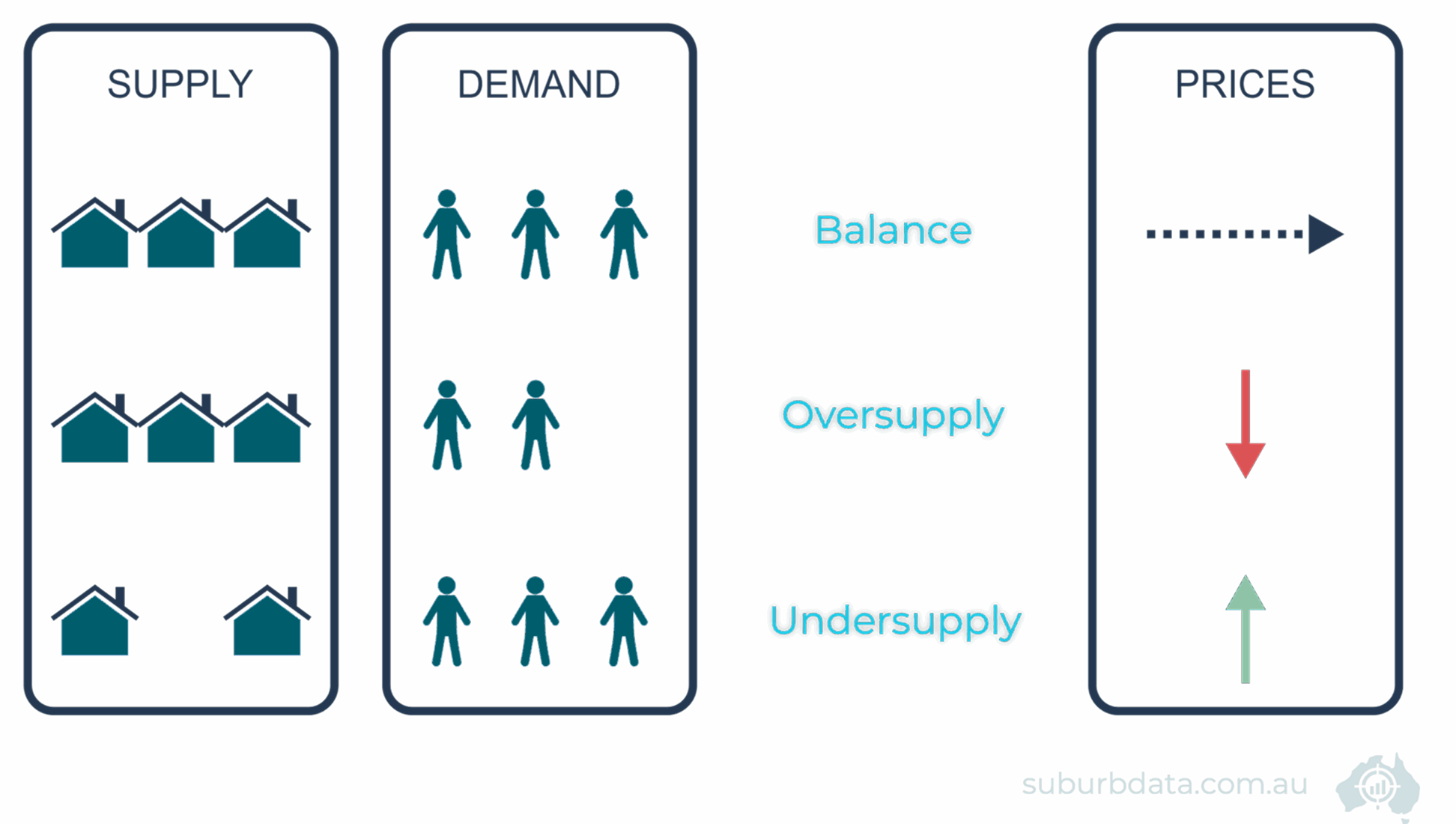
Property prices move according to one simple rule: the balance between supply and demand. When supply equals demand, prices stay steady. When supply exceeds demand, prices fall. When demand exceeds supply, prices rise. This fundamental principle explains why population growth is such a misleading metric. It often measures the wrong side of the equation.
Why High Population Growth Frequently Signals Oversupply
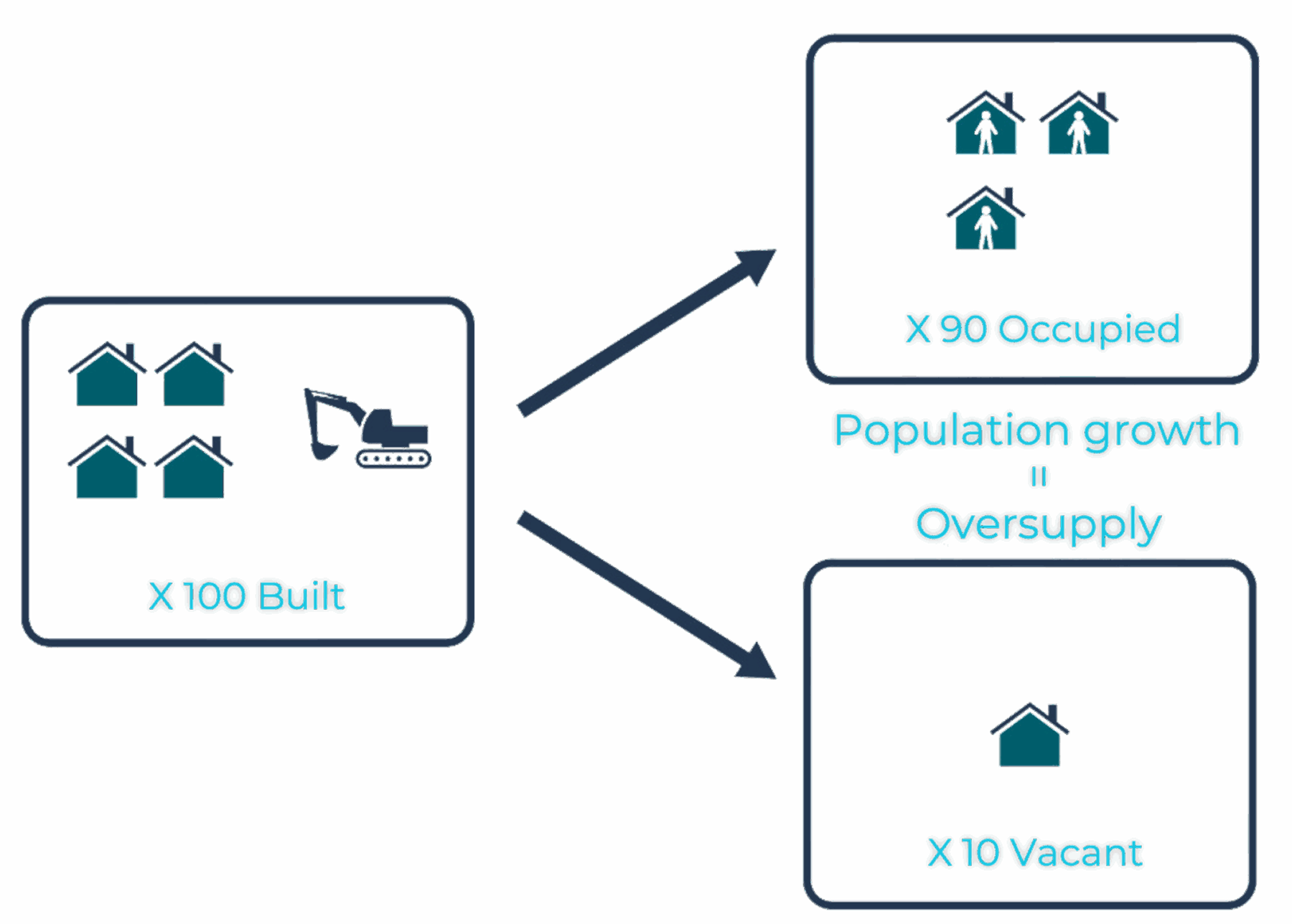
Imagine 100 new dwellings built in a suburb. Ninety become occupied. Ten remain vacant. The suburb’s population increases. But so has its supply. That population growth came from new stock, not increased buyer competition. And supply is the enemy of capital growth. High population growth often tells you nothing about demand. Most of the time, it simply tells you more housing was built.
The Better Question: How Many Buyers Missed Out?
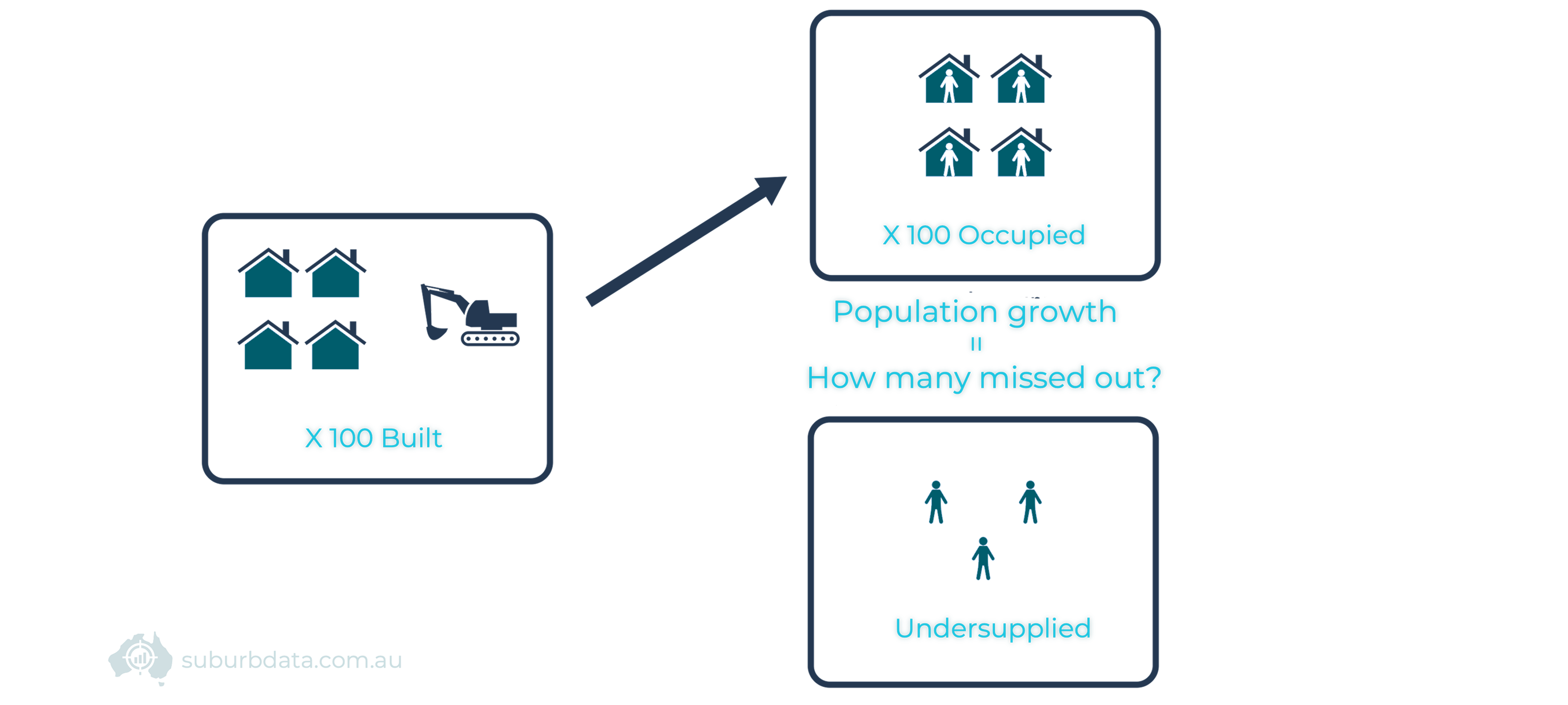
If 100 homes are built and all 100 are occupied, the key question is not how many people moved in. The real question is: how many people wanted to live there but couldn’t? These are the “missed out” buyers, the people who genuinely create upward pressure on prices. But population growth cannot measure this. It only measures who moved in, not who tried and failed.
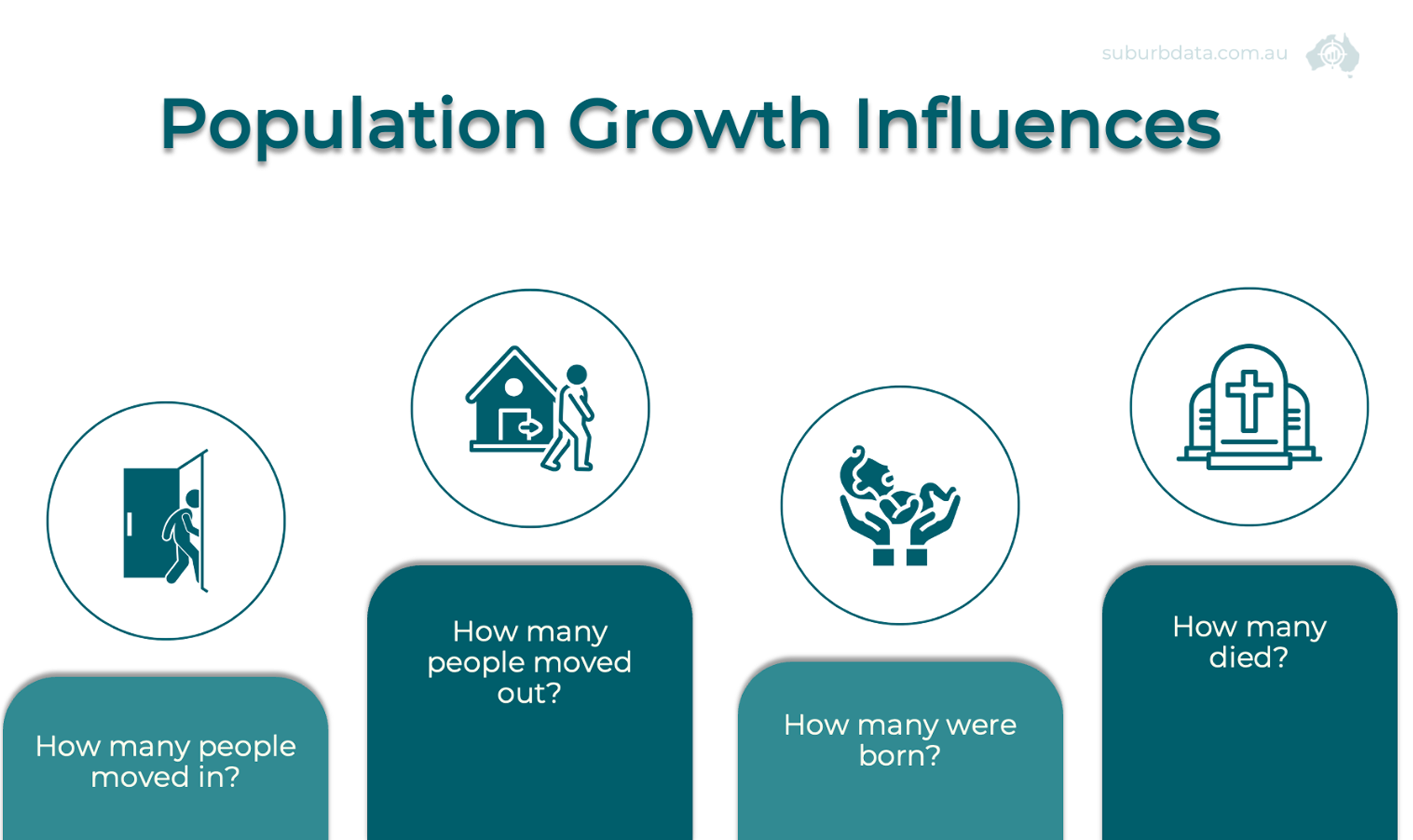
What Actually Drives Population Growth
Alright, in summary, population growth is not all it’s cracked up to be. Yet for decades it’s been shoved down our throats as a must-have research parameter. As you can see now, it’s more likely to be an indicator of oversupply than an indicator of demand. Don’t be fooled by the marketing of developers, their project marketers and business partners or near-experts who don’t know any better. If you see high population growth for a suburb, you should avoid it.
The Only Three Ways a Suburb’s Population Can Grow
There are only three mechanisms for population growth: Larger households Fewer empty dwellings More properties being built Two of these have almost no impact on capital growth. One of them dominates and it is the one investors need to watch closely.
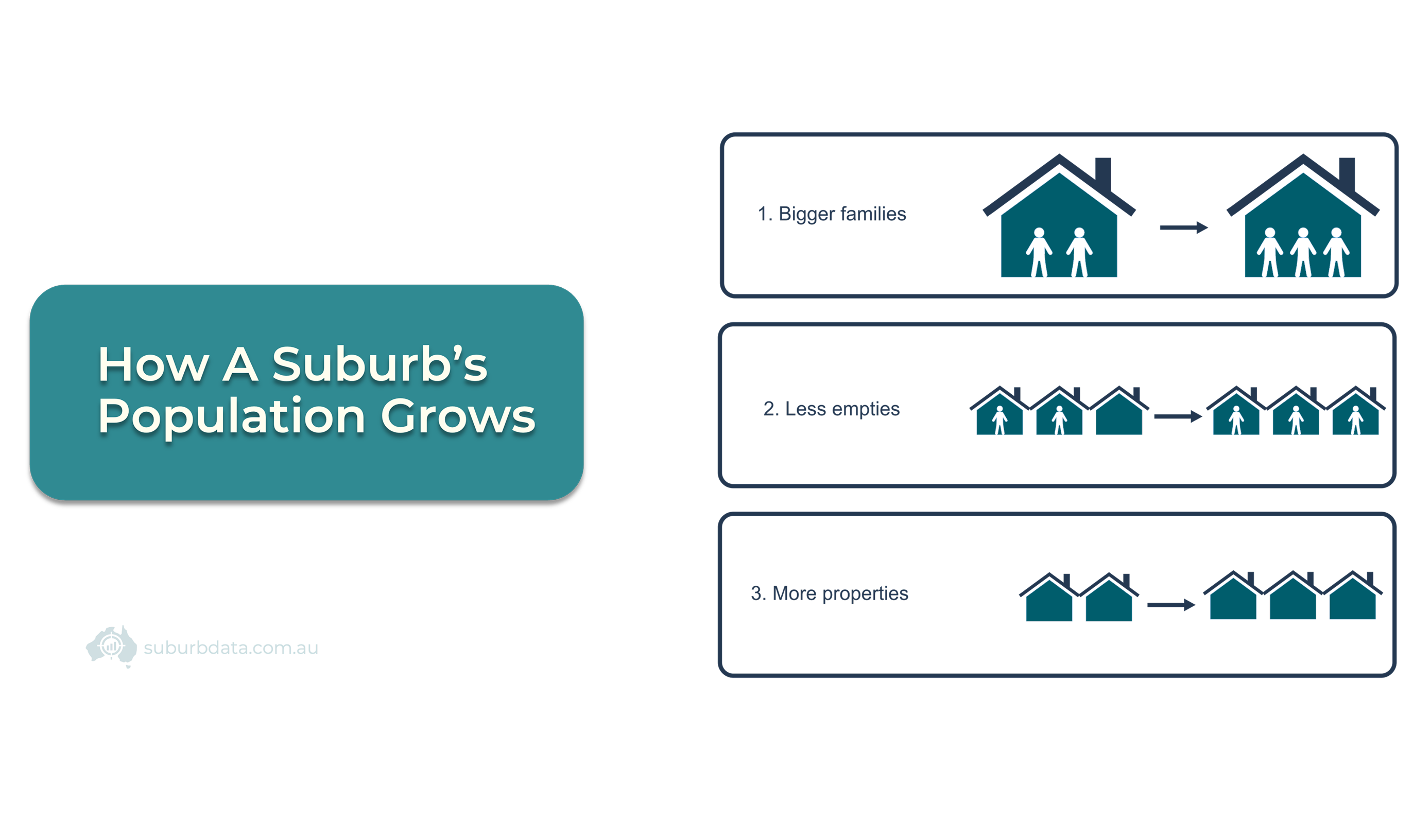
Bigger Families Do Not Create Capital Growth
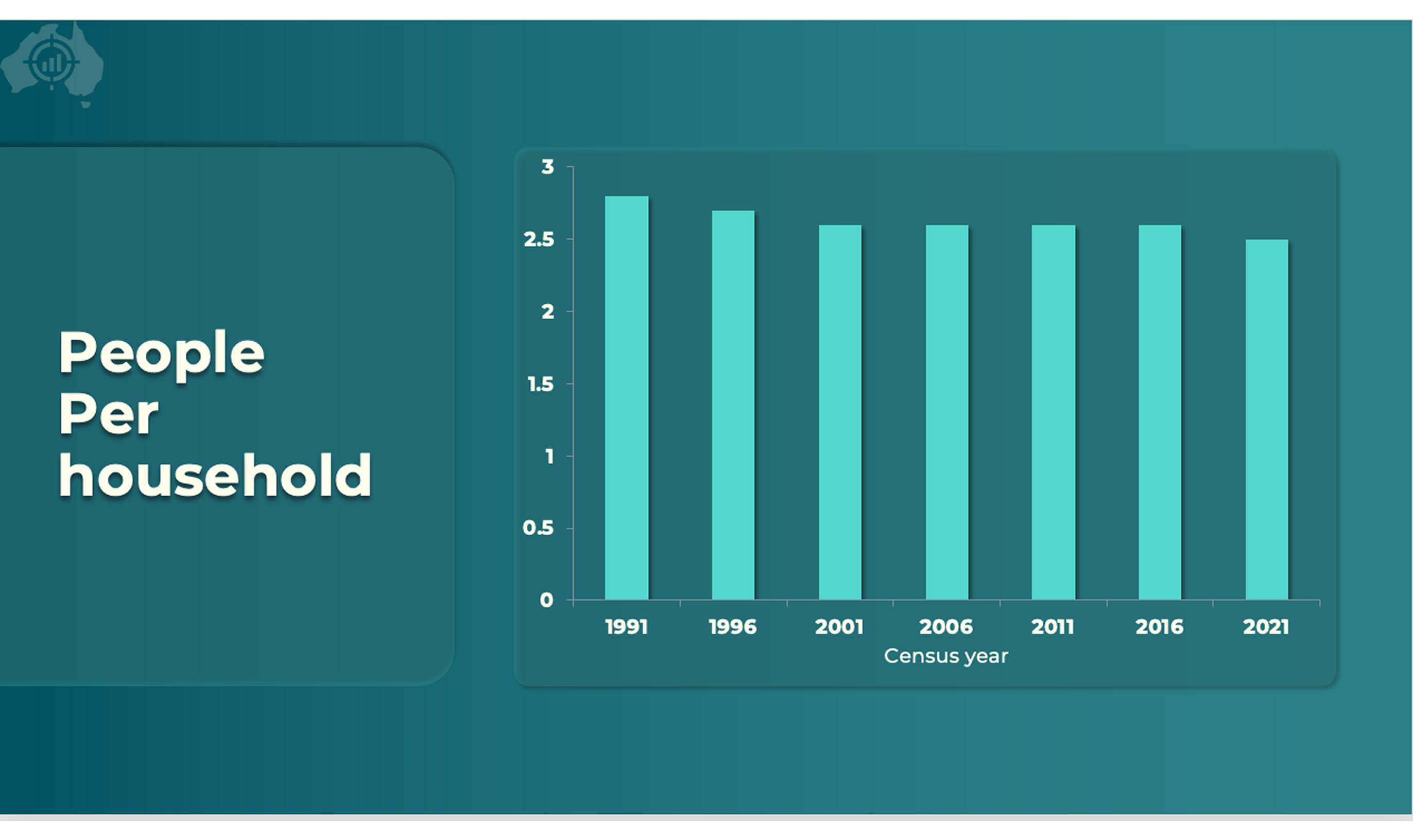
People per household in Australia has barely changed in more than 30 years. It has remained remarkably consistent. The number of people living under one roof does not meaningfully impact property demand. Population can grow even if the total number of dwellings stays exactly the same. This is why relying on population growth alone can be misleading. You need to understand what drove the growth
Falling Vacancies Do Not Create Large Population Growth
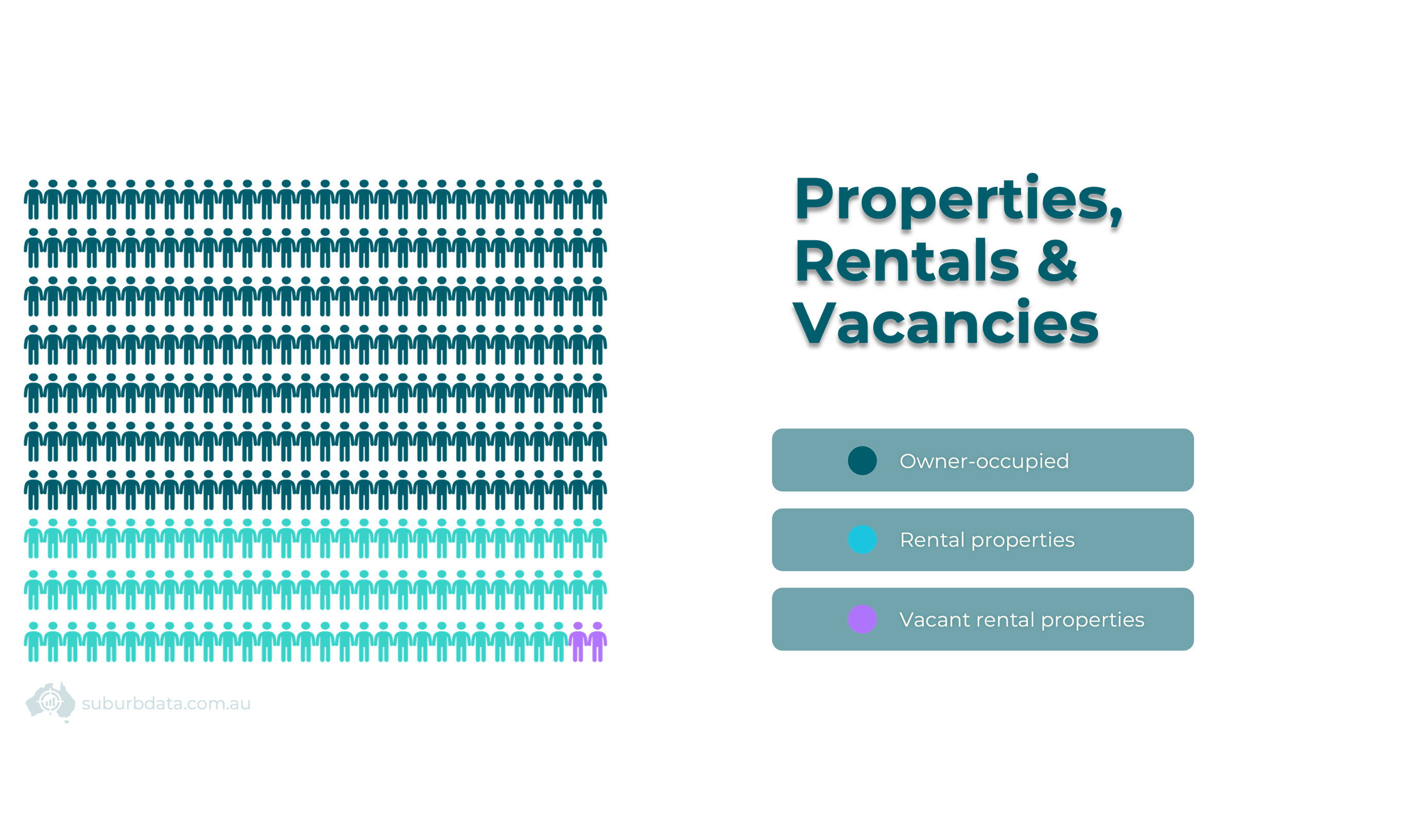
Around 30 percent of homes in a typical suburb are rentals. Roughly 3 percent of them are vacant at any given time. Even if every single vacant rental were filled, the population would increase by only about 1 percent. Vacancies simply do not have enough space to create meaningful population increases. The effect is tiny.
Case Studies: When High Population Growth Failed to Deliver
Docklands (Melbourne) 2014: Contract signed 2016: Purchased for $765k 2023: Sold for $630k A loss of $135,000 plus a major opportunity cost. Despite strong population growth in the CBD and surrounding precincts, apartment oversupply crushed prices.
Hobart Outperformed Despite Low Population Growth
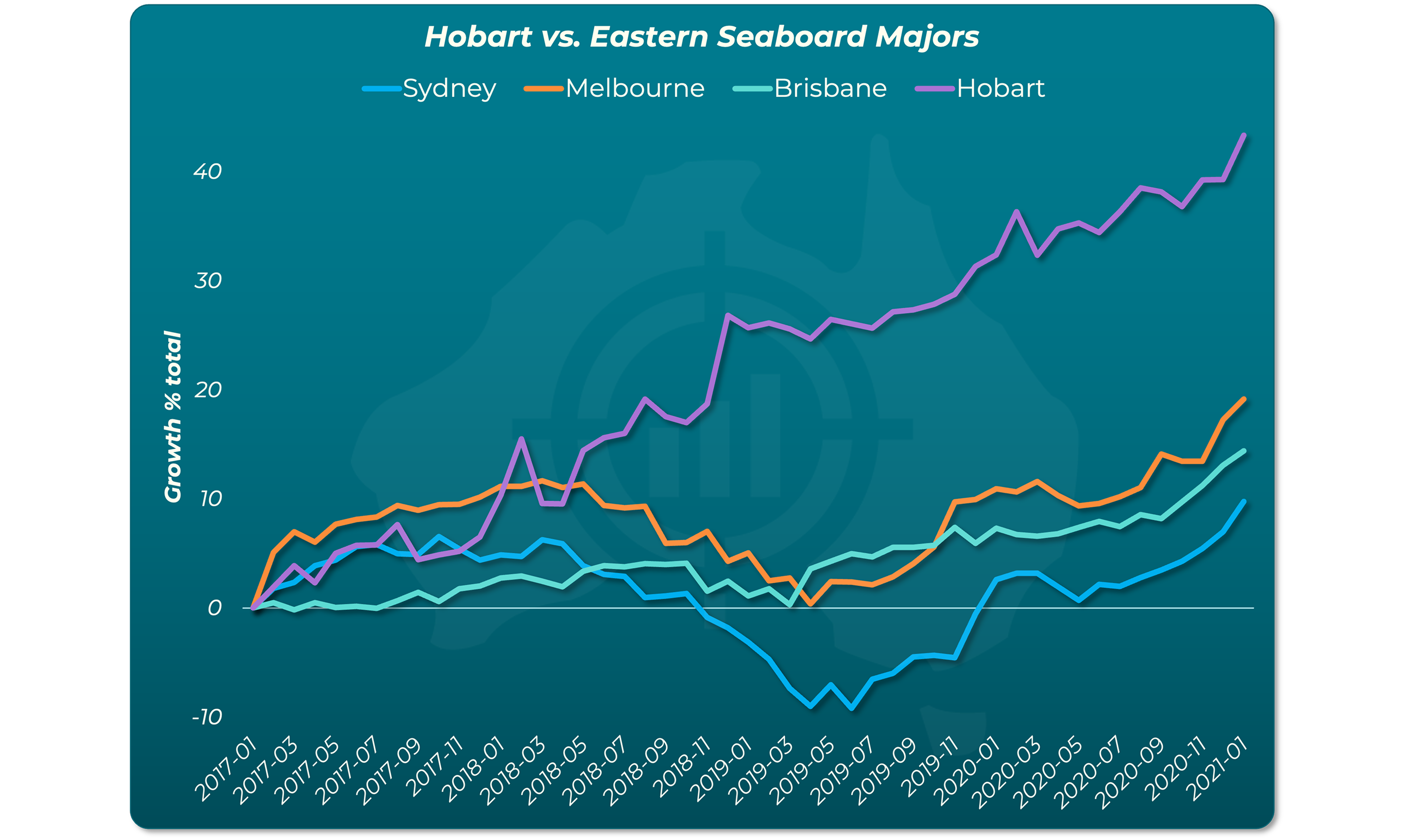
Hobart provides a clear example of why strong capital growth does not rely on strong population growth.
This chart compares the growth of Hobart with Sydney, Melbourne and Brisbane from 2017 to 2021. Across this four-year period, Hobart’s growth significantly outperformed the three largest capital cities on the eastern seaboard.
The growth gap is more than 20 percent. For a $500,000 property, that represents an opportunity cost of roughly $100,000.
What makes this especially interesting is that:
- Hobart had much lower entry prices
- Rental yields were noticeably higher
- Hobart’s population growth was far slower than Sydney, Melbourne and Brisbane
- This slower population growth was true before and throughout the period shown
Despite slower population growth, Hobart delivered far stronger capital growth.
And Hobart is not the only example.
Cairns (2006–2011 population growth, 2011–2016 capital growth)
The population of Cairns grew at 6.4 percent per year from 2006 to 2011, roughly four times the long-term national average. You would expect strong price growth to follow. Instead, from 2011 to 2016, Cairns delivered just 1.8 percent capital growth per year, around three times slower than the national average.
Townsville (2006–2011 population growth, 2011–2016 capital growth)
Townsville grew at 4.1 percent per year between 2006 and 2011, about three times faster than normal. Yet prices fell in the following period from 2011 to 2016, declining by around 2 percent per year.
Sydney (2006–2011 population growth, 2011–2016 capital growth)
Sydney’s population grew at 1.4 percent per year from 2006 to 2011, which is typical for Australia. Nothing remarkable. But from 2011 to 2016, Sydney recorded extraordinary price performance, with capital growth of 9.4 percent per year, close to boom-level conditions.
The Lesson
Across Cairns, Townsville and Sydney, capital growth did not follow population growth. High population growth did not guarantee strong price performance, and average population growth did not prevent exceptional gains.
The Broader Data: What Thousands of Markets Tell Us
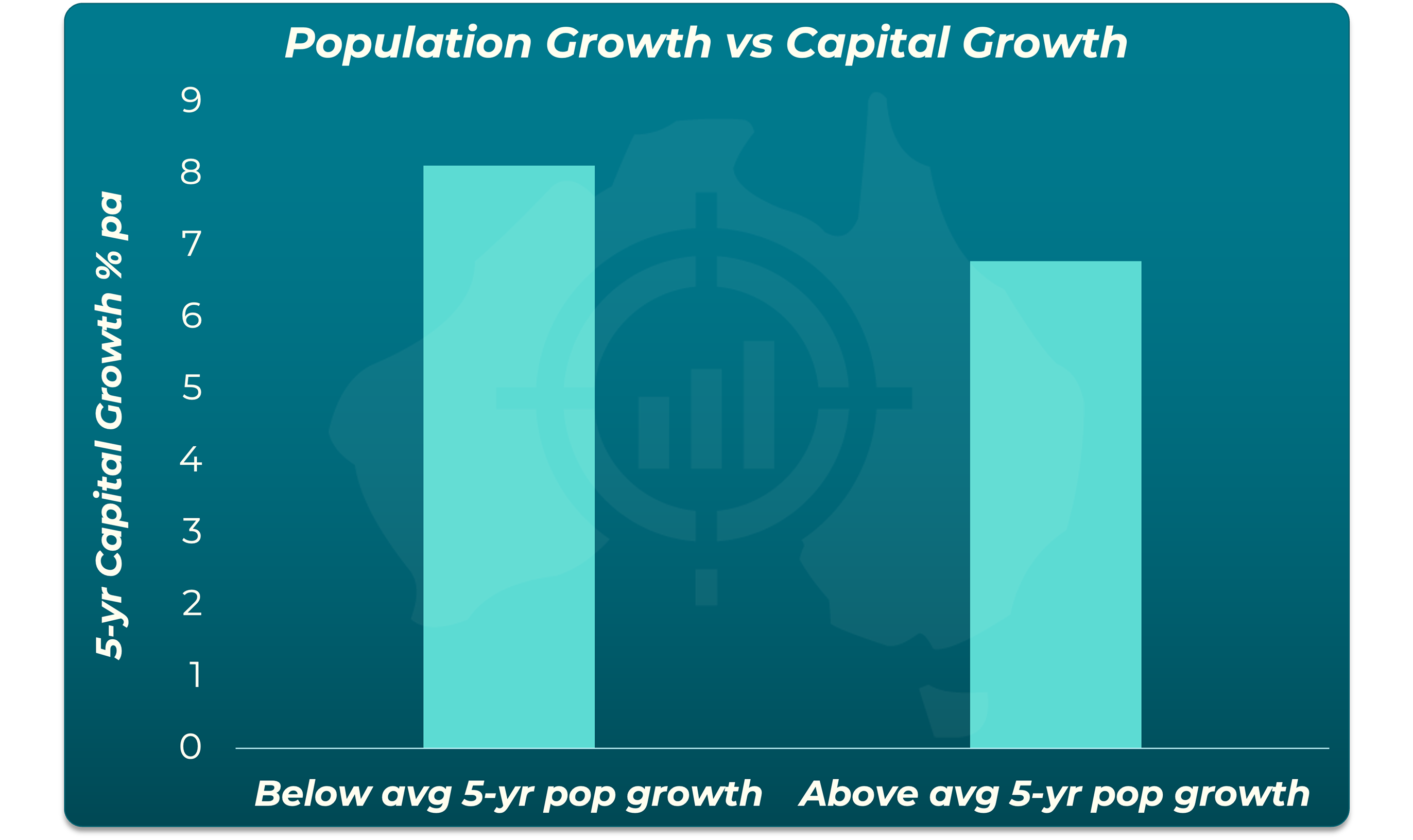
When we look at all markets over multiple five-year periods, the pattern becomes clear.
Suburbs with below average population growth delivered higher capital growth.
Suburbs with above average population growth delivered lower capital growth.
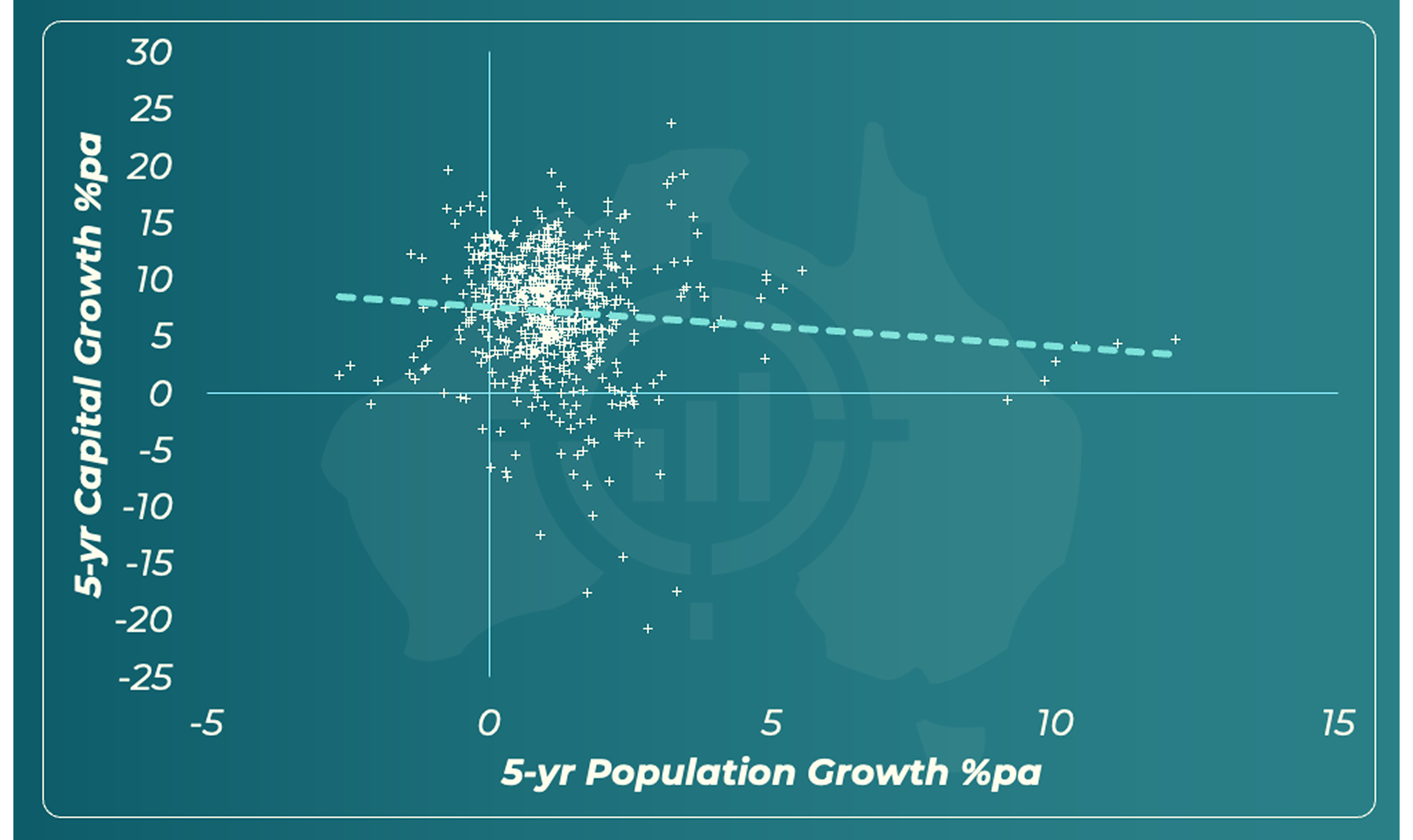
And when we map population growth against the following five-year capital growth, the scatter plot reveals no upward pattern. If anything, the trend slopes slightly downward.
Population growth does not lead to capital growth.
Why Population Growth Is Nearly Useless for Investors
There are several reasons:
*Population data is only updated every five years
*It is a lag indicator
*It does not explain why the population changed
*It often reflects supply, not demand
*New residents require a dwelling to exist first
Most importantly:
Population data does not tell you how many people missed out, which is what actually drives capital growth.
The Real Insight for Investors
The strongest markets are often suburbs where population growth is minimal or impossible.
These are areas with:
*limited land
*strict planning
*rules established
*neighborhood's strong demand
*naturally capped supply
Competition increases because there is no new stock. Scarcity drives growth.
Final Thoughts
Population growth is one of the most repeated metrics in Australian property. But it is also one of the most misunderstood. High population growth usually signals expanding supply, which suppresses long-term price growth.
Investors should focus on areas where demand exceeds supply, not areas where supply is booming.
If you understand this distinction, you avoid one of the biggest traps in property research and place yourself in a far stronger position to choose high-performing suburbs.