

Buying a property under market value is often promoted as a smart investing strategy. The idea is simple: buy something for less than it is worth, lock in instant equity, and grow your portfolio faster.
It sounds clever. It sounds safe. But the reality is very different.
Most bargains are not truly under market value. When they are, they tend to appear in slow or declining markets where price growth is weak. These are not the environments that build wealth.
This article breaks down the logic, the data, the valuation process, the behavioural traps, the marketing spin, and the ethics behind the strategy. It explains why under-market-value buying rarely works as advertised and why bargain hunting often harms investors more than it helps them.
How Property Prices Really Change
Property prices move according to one simple rule: the balance between supply and demand. When supply equals demand, prices stay steady. When supply exceeds demand, prices fall. When demand exceeds supply, prices rise. This fundamental principle explains why population growth is such a misleading metric. It often measures the wrong side of the equation.
Understanding the Terms Properly
Marketing often mixes up four very different concepts.
Asking Price The seller’s wish price, not market value.
Cheap Below the suburb median for reasons such as:
- smaller land
- main road exposure
- dated or damaged condition
- awkward layout
- environmental or planning constraints
Cheap usually indicates compromise, not opportunity.
Discounted The difference between the advertised price and the sale price. Most properties sell below asking, so this number means very little.
Under Market Value A price that is lower than what a bank valuer assesses the property to be worth. This is the only definition that matters because lenders rely on it.
How Valuers Determine Market Value
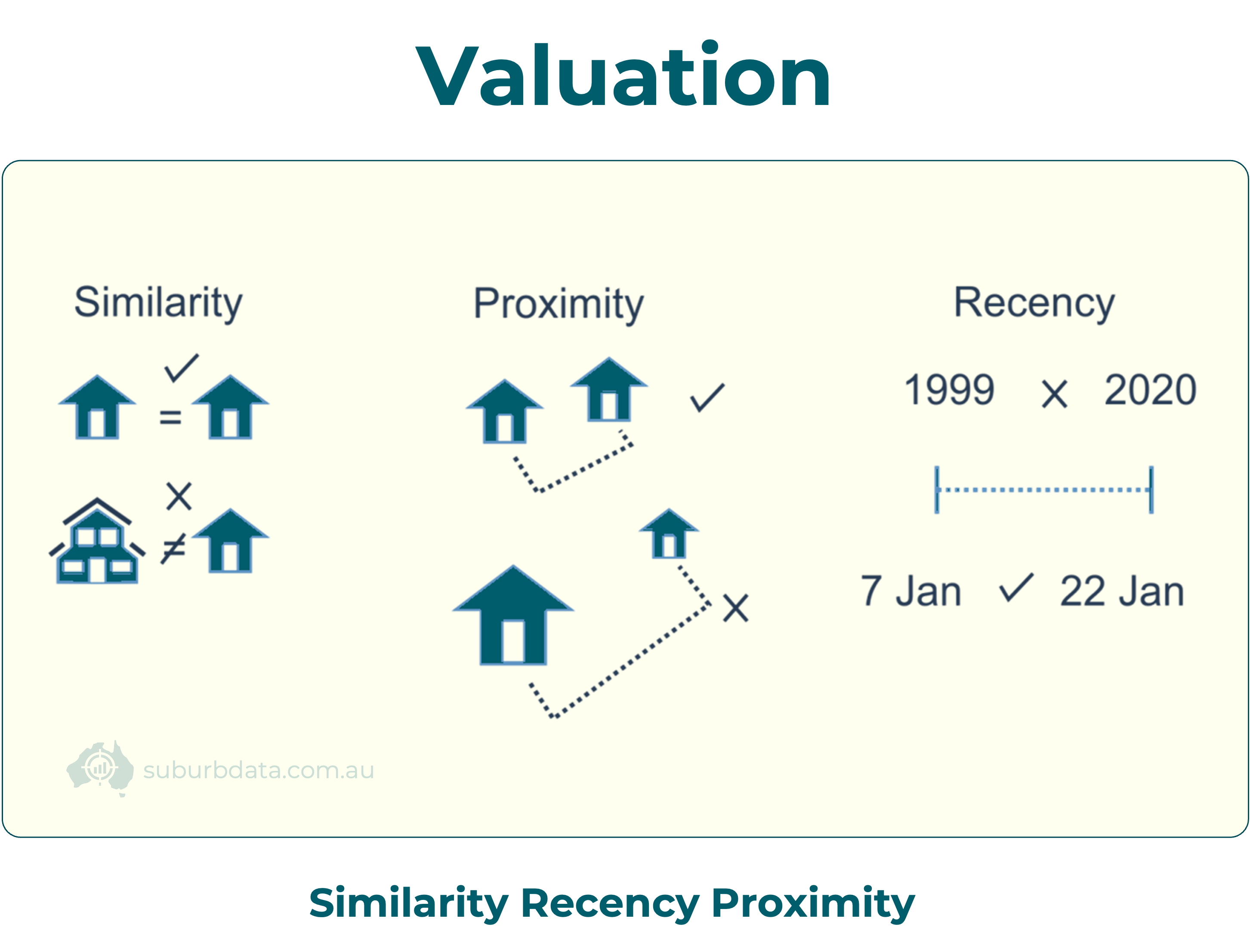
Valuers base their assessment on:
- Similarity
- Proximity
- Recency
A desktop estimate cannot identify:
- structural issues
- slope
- light
- noise
- recent buyer competition
This is why desktop valuations often mislead investors. They offer confidence without context.
Bias Distorts Everyone’s Opinion of Value
Every party in the transaction has incentives that push their interpretation of value in a different direction.
- Sellers aim high
- Buyers aim low
- Valuers lean conservative
- Agents prioritise speed
- Buyers agents may prioritise workflow efficiency
Even when using the same sales evidence, each party interprets it differently. A hidden bargain that only one person has discovered is extremely unlikely.
Problem One: Before You Buy, You Don’t Know the True Value
Value behaves like a range, not a fixed number. It depends on:
- available comparable sales
- how similar those sales are
- the seller’s urgency
- current market demand
If comparable evidence is limited, both sides operate with incomplete information.
If demand is strong, bargain hunting is impossible. Examples include:
- ten or more offers on the first day
- buyers inspecting before public listing
- agents prioritising qualified buyers
No one buys under market value in a hot market.
Problem Two: After You Buy, the Value Becomes Crystal Clear
Once the property sells, uncertainty disappears. The price paid becomes:
- the most recent comparable
- the closest comparable
- the most relevant comparable
This resets the property’s value instantly.
There is no instant equity. There is no immediate uplift for refinancing. There is no profitable flip purely based on the purchase discount.
The purchase price becomes the benchmark that valuers use.
Case Study Analysis: The “Wins” That Weren’t
A review of multiple marketed case studies of buying under market value, revealed very different outcomes from the claims. On average:
- Claimed discount: 12.3 percent
- Actual discount: 2.7 percent
- Average suburb growth: negative 1 percent
- Net result after nine months: roughly 1.7 percent positive
Some buyers appeared to pay above fair value despite being told they bought below it.
The patterns showed that the largest discounts occurred in the weakest markets, which cancelled out the small initial benefit.
These were promoted as success stories, yet they underperformed a basic buy-and-hold in a strong suburb.
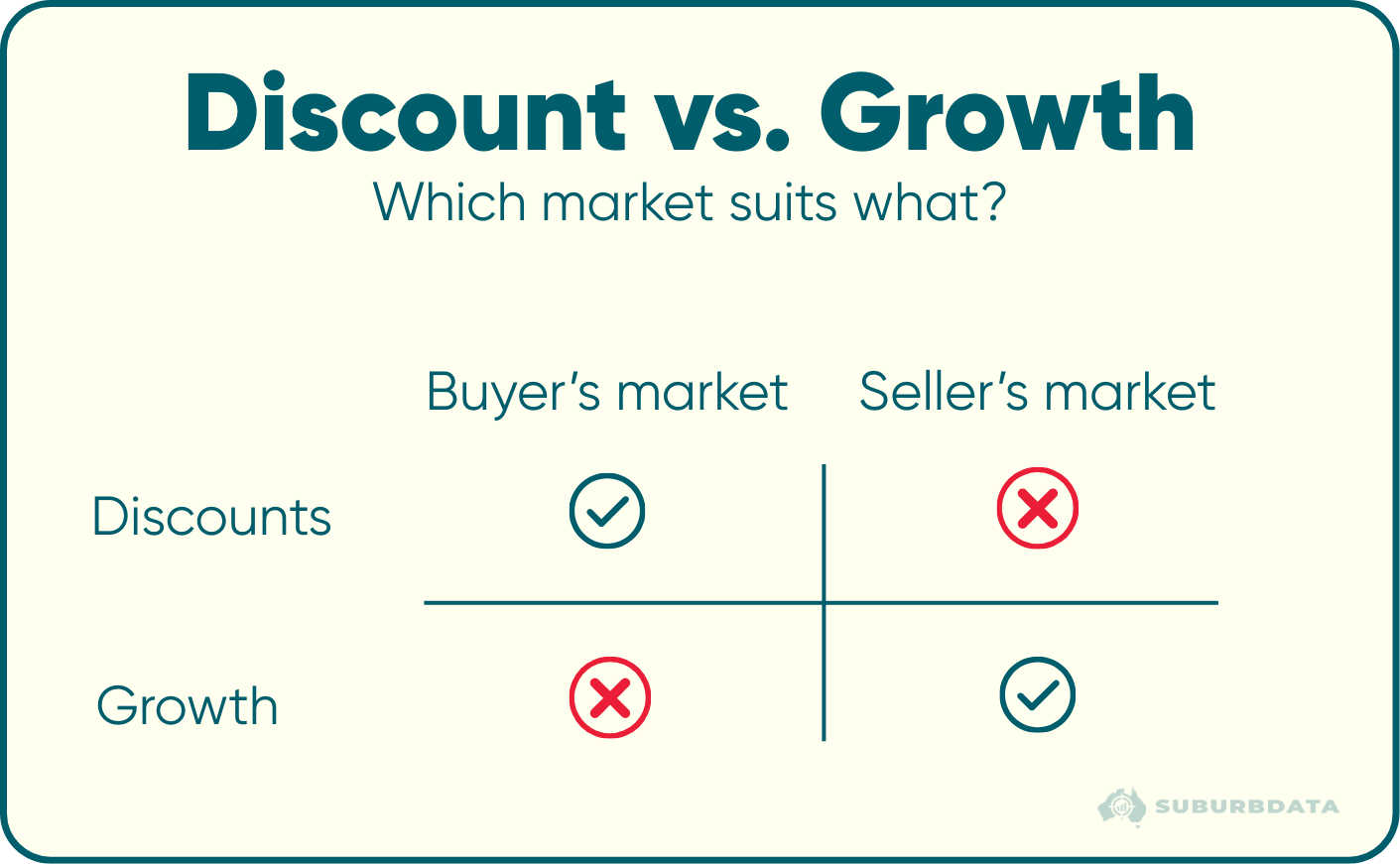
Discounts vs Growth: The Two Strategies Oppose Each Other
Discounts happen in low-demand markets. Low demand suppresses price growth.
Growth happens in high-demand markets. High demand removes the possibility of buying below market value.
In strong markets:
- low offers are rejected
- buyers compete
- properties sell quickly
- prices rise organically
The Data 2010 to 2024: Long-Term Results
Analysis across hundreds of thousands of transactions showed clear patterns.
High-discount suburbs (average discount of 10 percent or more)
- Average discount: 12.2 percent
- Three-year growth: 13.1 percent
Low-discount suburbs (average discount of 2 percent or less)
- Average discount: 0.7 percent
- Three-year growth: 25.1 percent
Discounts appear in markets that are already soft.
Distressed Sales: What They Are and Why They Rarely Help
Distressed situations often promoted as opportunities include:
- mortgage repossessions
- divorces
- deceased estates
- sellers committed to another purchase
These conditions do not guarantee a reduced price. In strong markets, even distressed properties attract competitive offers.
When buyer demand is high, distressed sales do not translate into bargains.
Ethical Considerations
Profiting from someone’s hardship raises a moral question. Many investors do not want wealth built on another person’s crisis, particularly when the financial benefit is usually small.
Conclusion: Why the Strategy Fails More Often Than It Works
The pursuit of under-market-value areas fails because:
- true value is unclear before the sale
- the strategy works against the conditions needed for capital growth
- it mostly occurs in low-demand markets
- savings are small and inconsistent
- Even short-term growth outperforms small discounts
Successful investing happens in markets where:
- demand is strong
- buyers compete
- properties sell quickly
- discounting is rare
These are the markets that generate capital growth.
A property becomes a great investment through years of compounding performance, not through a small discount on the day you buy it.