

The standard advice is to save for a property deposit as fast as possible. Cut expenses. Bank the surplus. Wait for 20% to land in the account.
It sounds disciplined. It is also slow.
A bank account earning 2% interest typically cannot keep up with a share market that historically returns 8 to 10% per annum. The faster way to a deposit is to invest for it.
Step 1: Control Your Cashflow
Build a budget. Live within means. Generate surplus.
Without surplus, there is nothing to invest.
The surplus is not for a deposit fund. The surplus is what gets invested.
Step 2: Learn Share Investing Before Property
Learn shares first.
The diagram below shows the process. Savings flow into shares first, then more shares over time, then eventually a property.
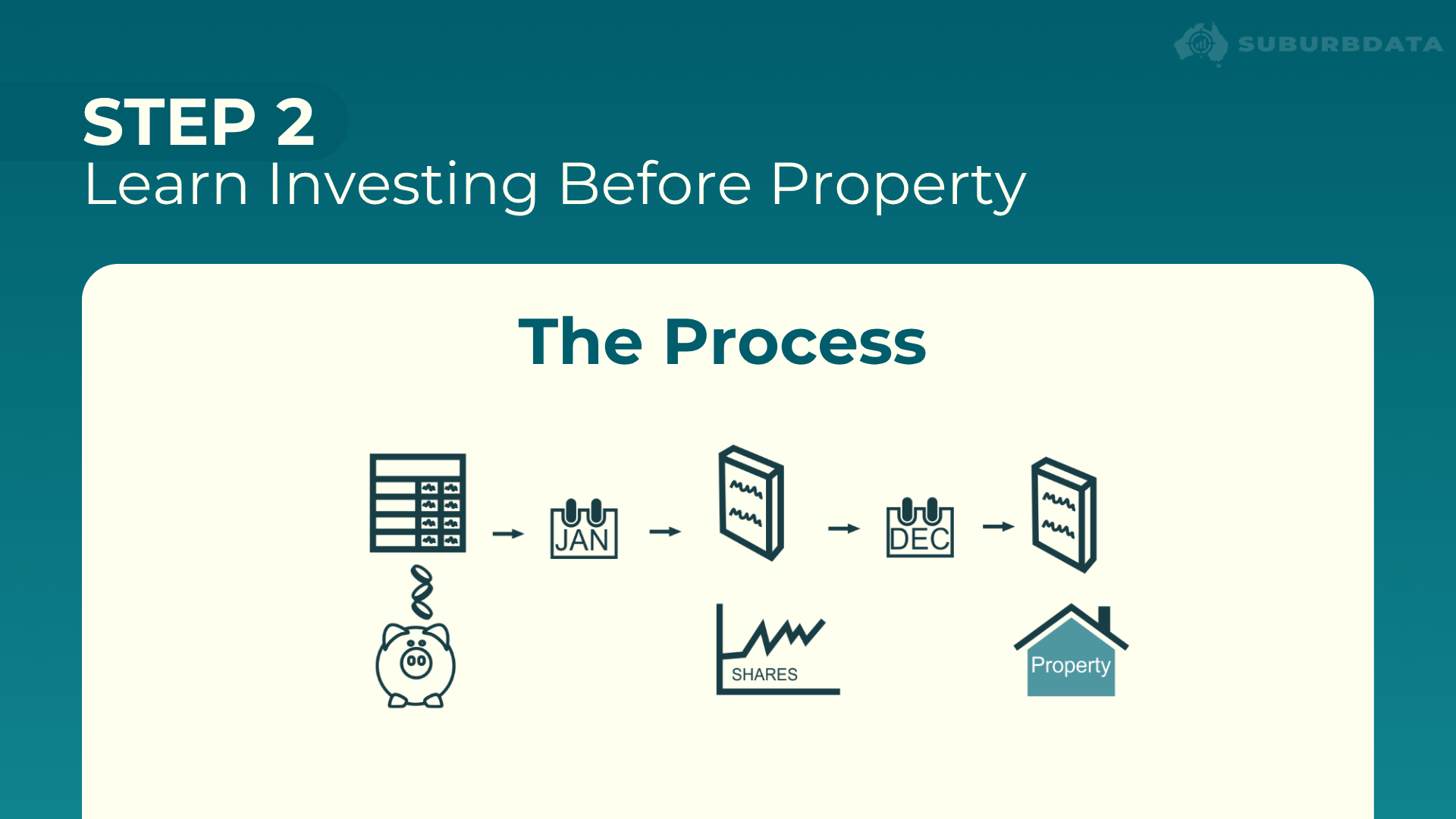
Shares require less capital to start. Property entry usually requires $100,000 or more in deposit and costs. Shares can start with as little as $1,000.
The first lesson in shares is capital preservation. Forget about making money. Focus on not losing it. The share market teaches volatility, sentiment, and risk.
An index fund is usually a safer choice than a small selection of specific shares.
A share portfolio over the next few years usually grows faster than money in a bank account, even if the portfolio is quite conservative.
Step 3: Learn Property While You Wait
While the share portfolio is growing, learn everything you can about property investing.
The first thing to learn is marketing. Not negative gearing, financing, or growth drivers. Marketing.
The property industry is full of marketing magicians. Knowing their playbook is part of the defence.
Damien: "Hey Jez, how do I make a million dollars?"
Jeremy: "Sell hope."
Damien: "And I need to make it fast."
Jeremy: "Sell false hope."
The more desperate you are to achieve financial freedom, the more vulnerable you are to the marketing magicians. The more excited you get about the prospect of an expert's service, the more likely you have fallen for their marketing BS.
Some signals of a fake expert:
- Full of opinion, not research
- Got prior topics in the Expert Busting Series wrong
- Sounds overly confident
- Shows cherry-picked client gains rather than averages or medians
- Sells the dream rather than the process
The boring processes and technical details are usually where the truth lives. If it bores you and sounds like hard work, you are probably on the right track.
For more on this, see Property vs Shares Episode 36, Episode 37, and Episode 38.
Why Property Is the Next Step
Property has a few advantages over shares:
- Leverage. An 80% LVR is bog-standard for property. 90% is possible. Same growth produces a very different outcome with leverage.
- Control. Property owners can influence outcomes. Renovate, extend, sub-divide, furnish for short-stay. Share owners cannot.
- Beating the average. Property is dominated by owner-occupiers, not professional investors. Outperforming a home buyer is usually easier than outperforming a fund manager. The top markets picked out by the Demand to Supply Ratio have historically outperformed the national growth rate by around double over the following 3 years.
How Property Risk Looks Different
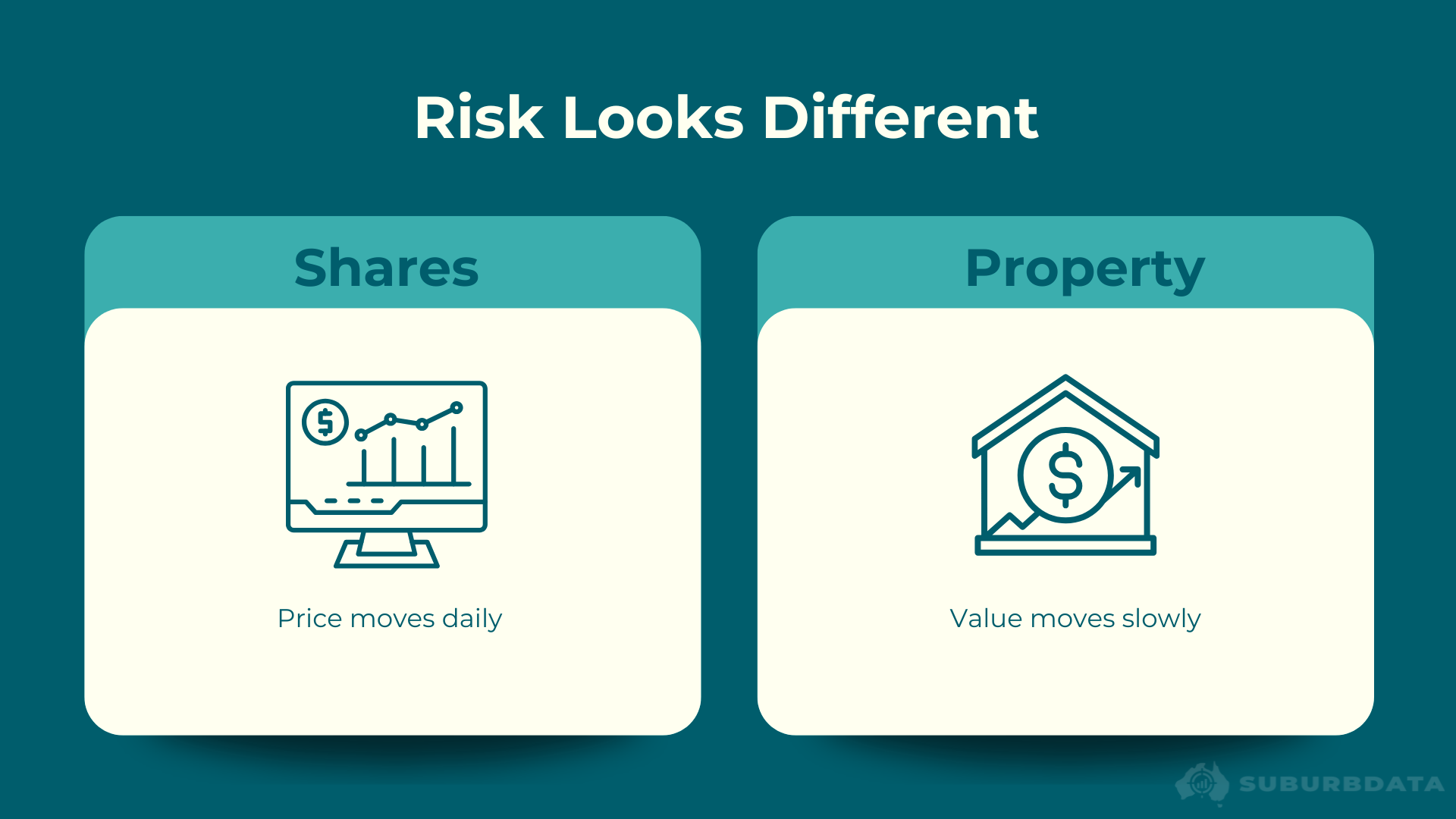
- Volatility. Shares can go up by 5% in a day and drop again the next. Property is far more stable. Lenders reflect this in higher LVRs for property.
- Liquidity. Liquidity is a big one in favour of shares. You can sell shares in a matter of minutes. Property might take months before money is back in the bank account.
- Regulation. The share market is well-regulated. Financial planners need qualifications. Property has plenty of sharks, spruikers, developers, project marketers, and wanna-be experts that can spoil a financial future.
- Margin calls. A dip in property value usually does not trigger a forced sale. A dip in share value can.
Shares vs Property Side by Side
The table below compares 12 attributes across shares and property.
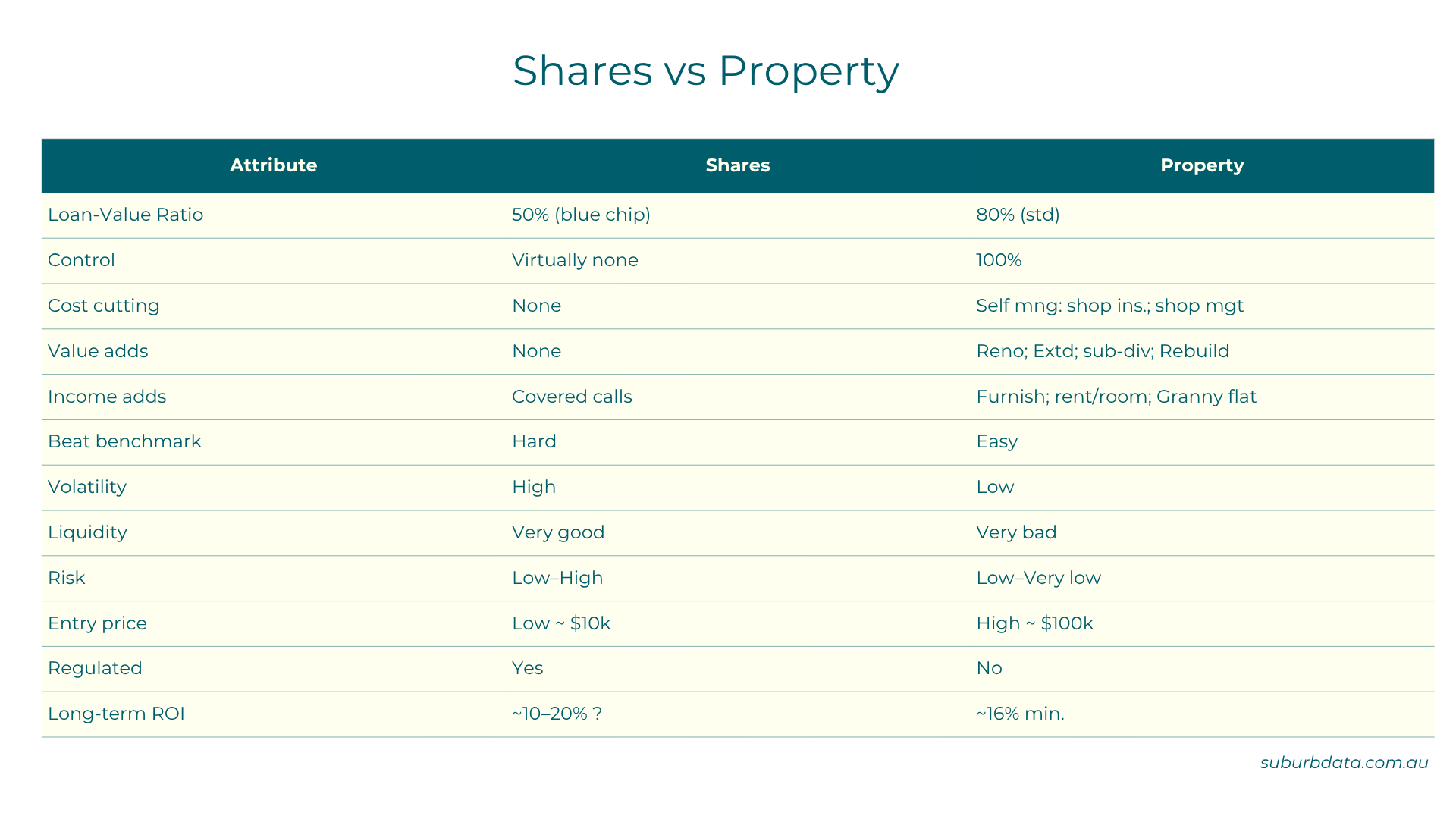
With property there is less diversification. Because the expense is so high, you have many eggs in one basket unless you have a large portfolio.
But property lets you force results when growth slows. Renovations, extensions, granny flat, sub-division, furnishing, Airbnb, rent per room.
What 16% ROI Looks Like
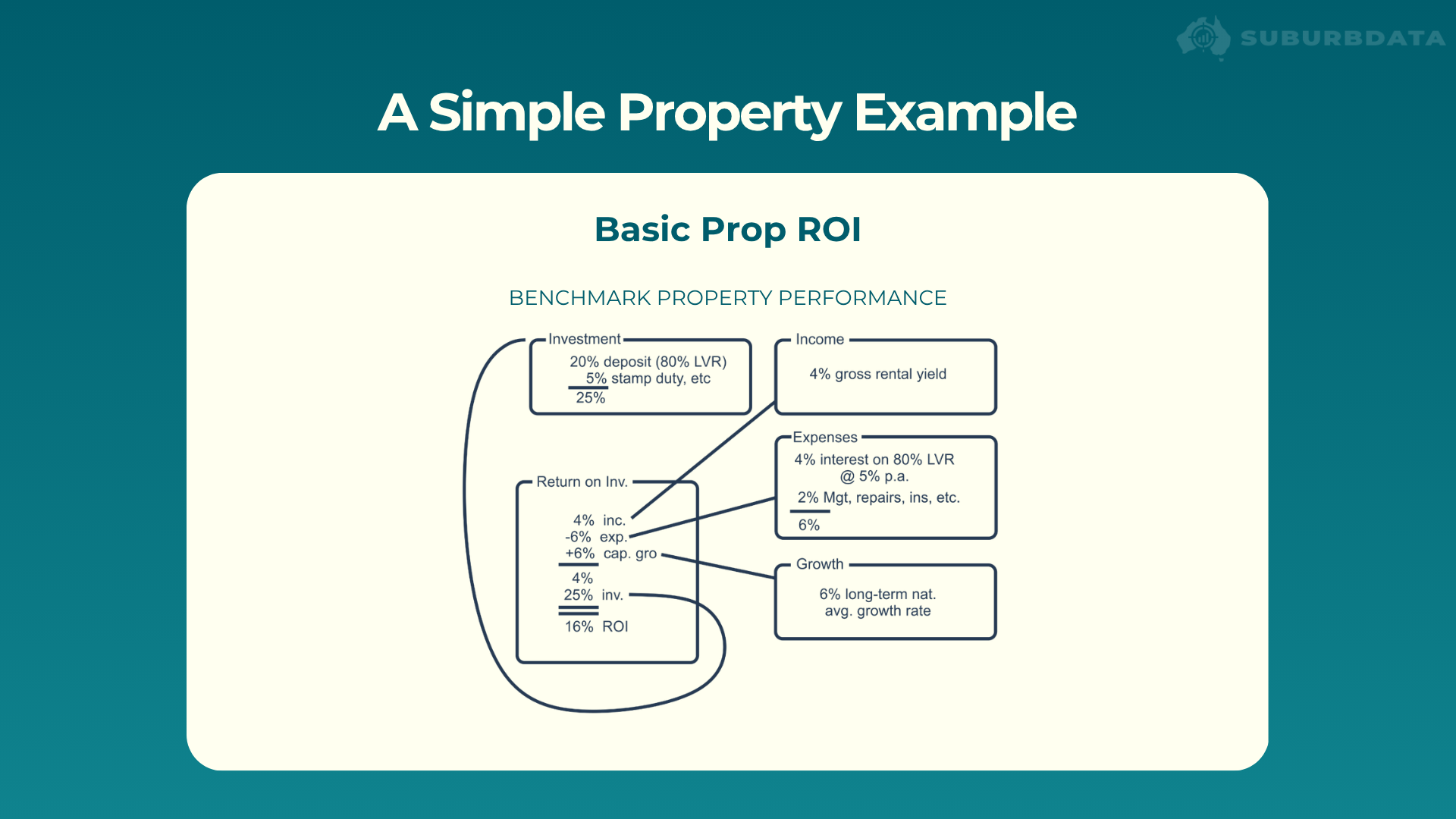
We calculated a long-term return on investment of around 16% for bog-standard property investing.
The diagram below shows how the maths works.
The components:
- Investment: 20% deposit + 5% stamp duty and entry costs = 25% of property value
- Income: 4% gross rental yield
- Expenses: 5% interest (6% rate on 80% LVR) + 2% holding costs = 7%
- Growth: 7% long-term national average
The calculation: 4% income minus 7% expenses plus 7% growth = 4% net gain on a 25% investment = 16% ROI.
That is a lot higher than money in the bank, which might be 2 or 3%. And it is comfortably higher than most of the brags of super fund managers on commercials.
These estimates are all based on bog-standard averages. A bog-standard LVR, bog-standard yield, bog-standard expenses, bog-standard growth.
Each input can be improved:
- Higher LVR (90% is possible)
- Better growth markets
- Higher-yield properties or markets
- Extending, granny flats, renovation, short-stay
- Hunting better interest rate deals
All of these can lift the base-line ROI above 16%.
Damien's Rules
Getting the deposit together has four rules:
- Without surplus, strategy is irrelevant.
- Discipline comes before returns.
- You don't optimise what you don't control.
- Simplify when volatility derails you.
Shares are volatile. They take up mental space. Time spent learning can stall action.
The personal game plan is about getting in, not being perfect. Cut expenses where possible. Sell the car if you have to. Make sacrifices.
Conclusion
Shares are for when you don't have enough money for a deposit on property. Shares will teach you some important investing experiences, especially related to volatility and preservation of capital. They are an important step in the investment journey. Start with shares until you can put on big pants and step up to a more profitable game: property investing.
Set yourself a budget you know you will stick to. A budget that includes saving. Learn all you can about shares while saving. Once you have enough to invest in shares, buy some that will not disappear. While they are growing, learn all you can about property investing.
- Shares: build capital and discipline.
- Property: scale with leverage.
Don't save for a deposit. Invest for one.