

Buying property is often sold as the moment you “make money.” Buy well, buy under market value, lock in instant equity.
This article breaks down why that idea is wrong in practice. It explains what you actually lose when you buy, who really gets paid at the transaction point, and why obsessing over “buying well” often leads investors into weak markets. The real driver of wealth isn’t how you buy — it’s where you hold.
Introduction: The Myth of Making Money When You Buy
How many times have you heard someone say:
“You make money when you buy.”
It’s one of the most repeated lines in property investing. Buyers’ agents say it. Developers imply it. Marketers rely on it.
The idea sounds sensible. Buy well. Buy cheap. Buy under market value.
But in real Australian property markets, investors do not make money when they buy.
They make money later — if the property performs.
At the point of purchase, the opposite happens.
You Don’t Make Money When You Buy
Investors only make money in property when:
- Time passes
- Capital growth compounds
- Rental income flows
None of that happens on settlement day.
When you buy, money immediately leaves your balance sheet.
You don’t create profit at purchase.
What You Lose When You Buy
Buying a property isn’t just about the deposit.
The transaction incurs unavoidable costs, including:
- Stamp duty
- Legal fees
- Building inspections
- Pest inspections
- Strata reports
On top of that are the indirect costs that rarely get discussed:
- Time spent researching locations
- Arranging finance
- Visiting properties and inspections
- Negotiating and signing contracts
There is a substantial expense involved in simply entering the market.
There is no scenario where you buy a property in Australia and instantly make money.
To recover these costs, you must hold the asset and allow capital growth to do its job.
Who Makes Money When You Buy?
Every property transaction creates winners.
The buyer is not one of them.
The people who make money when you buy include:
- Real estate agents
- Buyers’ agents
- Property developers
- The seller
- Solicitors and conveyancers
- Building and pest inspectors
- State governments
The investor is the only participant who pays now and waits for returns later.
What People Really Mean by “Buy Well”
When someone says “you make money when you buy,” they usually don’t mean it literally.
What they actually mean is:
If you buy at a good price, you’ve locked in some immediate equity.
That idea isn’t completely wrong.
But it’s dangerously incomplete.
It shifts investor focus toward:
- Buying under market value
- Chasing bargains
- Negotiating discounts
- Finding cheap properties
And that focus often pushes investors into the wrong markets.
Where Under-Market Purchases Really Happen
The easiest places to buy under market value are suburbs with:
- Weak demand
- Long days on market
- Low buyer competition
- Flat or falling prices
These conditions make discounts possible.
They also make capital growth unlikely.
By contrast, the strongest investment markets are the ones where:
- Buyer competition is intense
- Properties sell quickly
- Multiple offers are common
- Paying under market value is almost impossible
The contradiction is simple:
The markets that allow bargains are rarely the markets that deliver growth.
Focus: Buying Well vs Holding Well
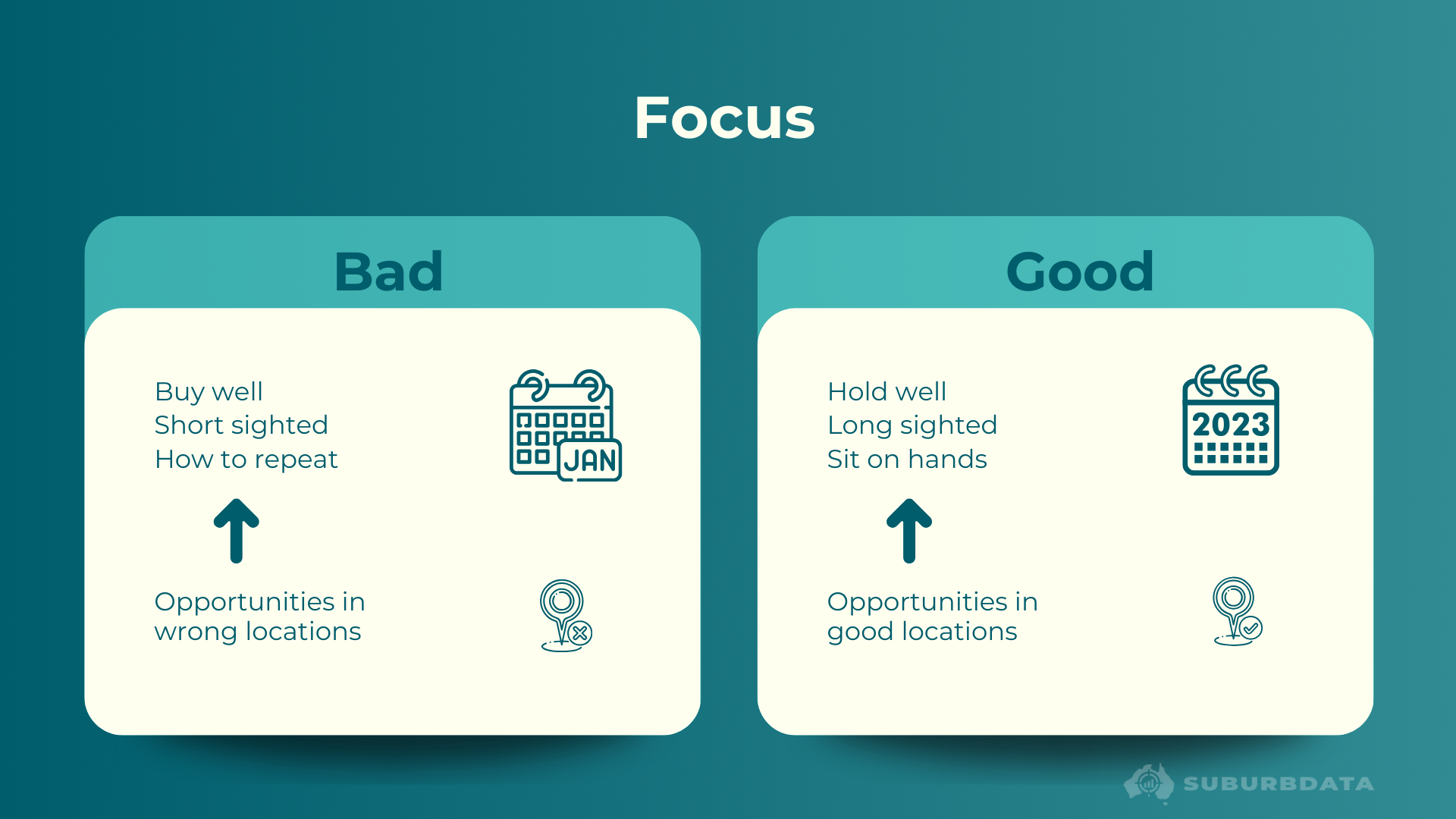
The Wrong Focus: Buying Well
When investors focus on buying well, they tend to be:
- Short-sighted
- Deal-driven
- Obsessed with bargains
- Drawn to inferior locations
The strategy is focused on a small gain at purchase rather than a big gain in the years that follow.
The Right Focus: Gains During Holding
Successful investors focus on holding well.
That means:
- Capital growth thinking
- Hot locations
- Letting time and growth work
- Sitting on quality assets
Capital growth doesn’t come from clever negotiation.
It comes from being invested in markets where demand outpaces supply.
Why Buying Cheap Often Means Buying Wrong
If you bought cheaply and haven’t made a profit, it’s rarely because you didn’t negotiate hard enough.
It’s usually because:
- The location lacks growth drivers
- Demand is structurally weak
- The market is flat or declining
Buying under market value doesn’t fix a bad market.
It just locks you into it.
The Real Question Investors Should Ask
If your strategy depends on buying well, ask yourself:
How often can you realistically do that?
Once every few years?
But if your strategy is based on holding assets that grow, then every month after purchase is progress.
Growth compounds while you hold.
Conclusion
You don’t make money when you buy property.
You make money while you hold it.
Your research should focus on what happens after settlement — not on squeezing a deal at the point of purchase.
Don’t focus on buying well.
Focus on holding well.