

A lot of experts advise investors to seek out cashflow positive properties. They say you can get both yield and growth.
That is true to some extent. But a focus on genuinely cashflow positive properties can cause more harm than good.
Capital growth is the ant's pants of property investing. A drift away from a growth focus will usually harm investment returns.
Growth Beats Cashflow
The most successful investments are the ones with great growth, not great yield.
The reason is asymmetry. The gap between excellent growth and ordinary growth is much larger than the gap between excellent yield and ordinary yield.
- Excellent growth: 15% per annum
- Ordinary growth: 7% per annum
- Growth gap: 8%
- Excellent yield: 7% per annum
- Ordinary yield: 4% per annum
- Yield gap: 3%
The growth gap is more than twice the yield gap. The equity gained from double-digit growth makes a 7% gross rental yield look virtually inconsequential.
Same Combined Return. Different Outcomes.
To show the difference pound-for-pound, consider two theoretical $500,000 properties over 10 years. Both produce a combined 10% per annum (yield plus growth).
Property A: 7% yield, 3% growth.
The chart below shows the total wealth created.
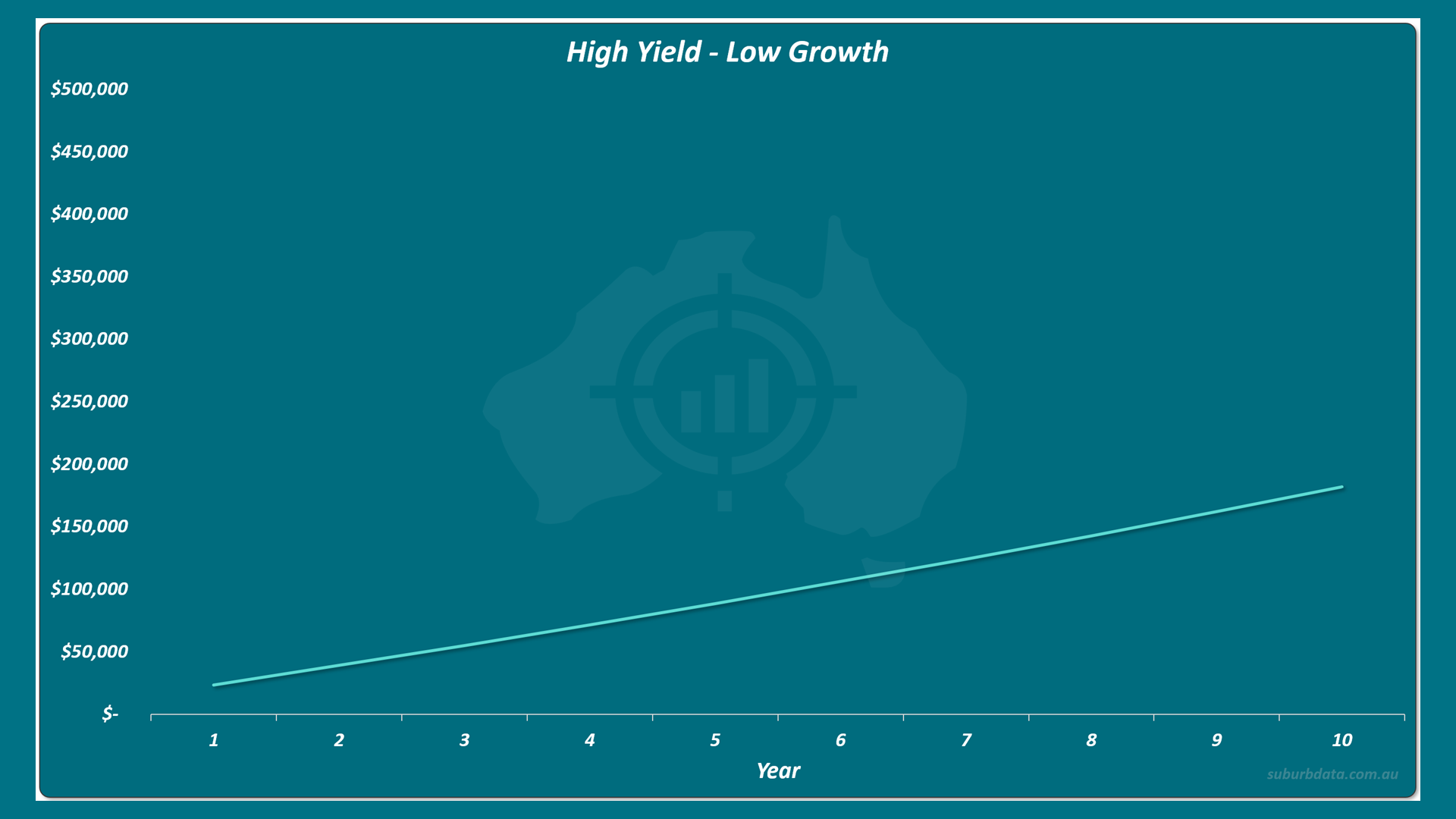
The turquoise line rises slowly. It is not a straight line, although it looks it. This is because the compounding effect of yield is small. Wealth created over 10 years is around $180,000.
Property B: 3% yield, 7% growth.
The chart below shows the same total wealth calculation, with yield and growth swapped.
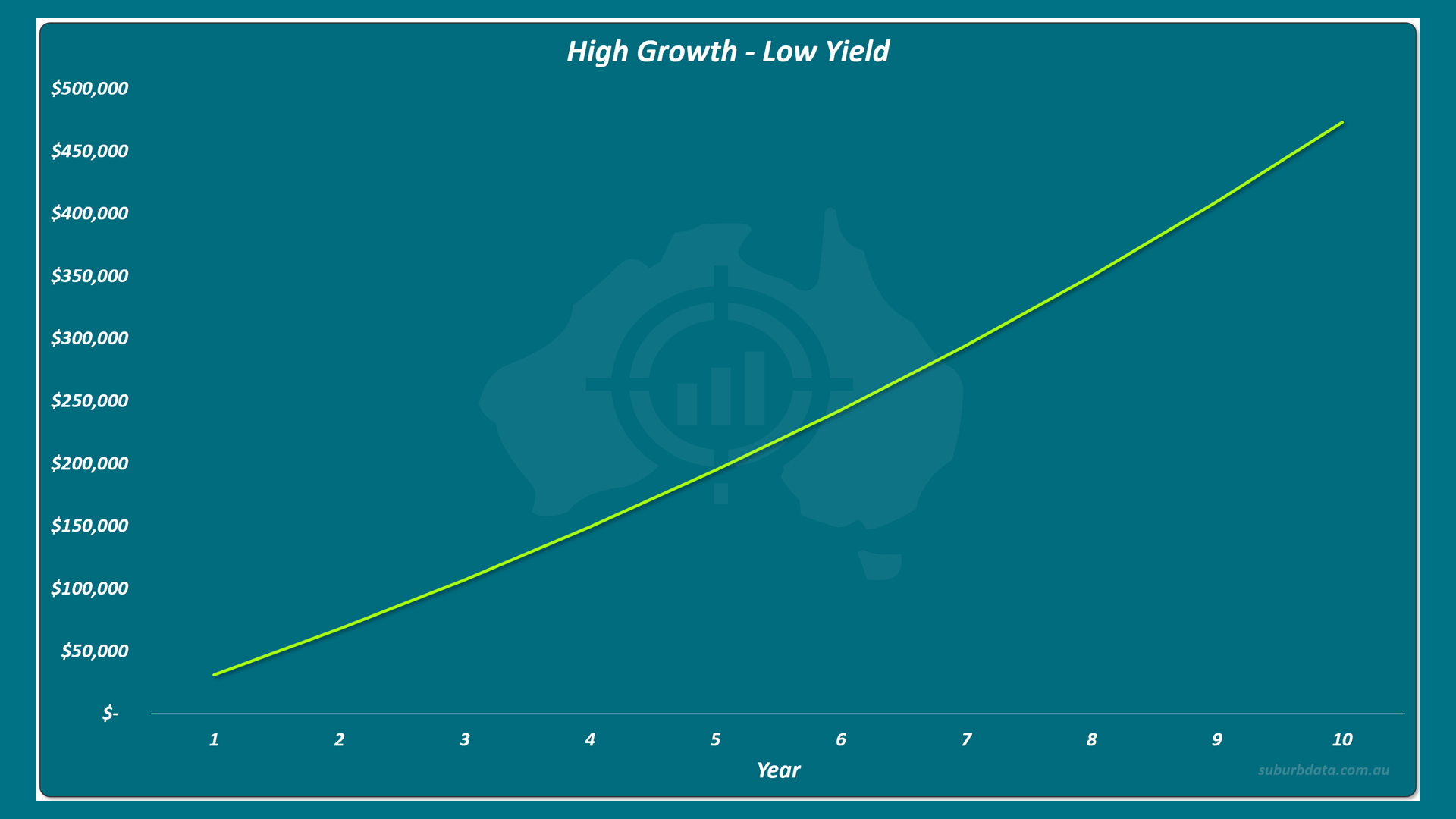
The lime line curves upward. Wealth created over 10 years is around $490,000.
Same combined return. Same property value at start. Different outcome by almost three times.
Pound-for-pound, growth has a bigger impact on net wealth than yield.
Why Growth Compounds Harder Than Yield
The forces of supply and demand that push prices higher also influence rents. Prices compound. Rents compound too. But the compounding is not symmetric.
We analysed about 50,000 observations of suburbs across Australia from 2010. For each suburb, we measured rent growth over a 12-month period, then capital growth over the 12 months that followed. Then we reversed the order: capital growth first, rent growth second.
The charts below show the result.
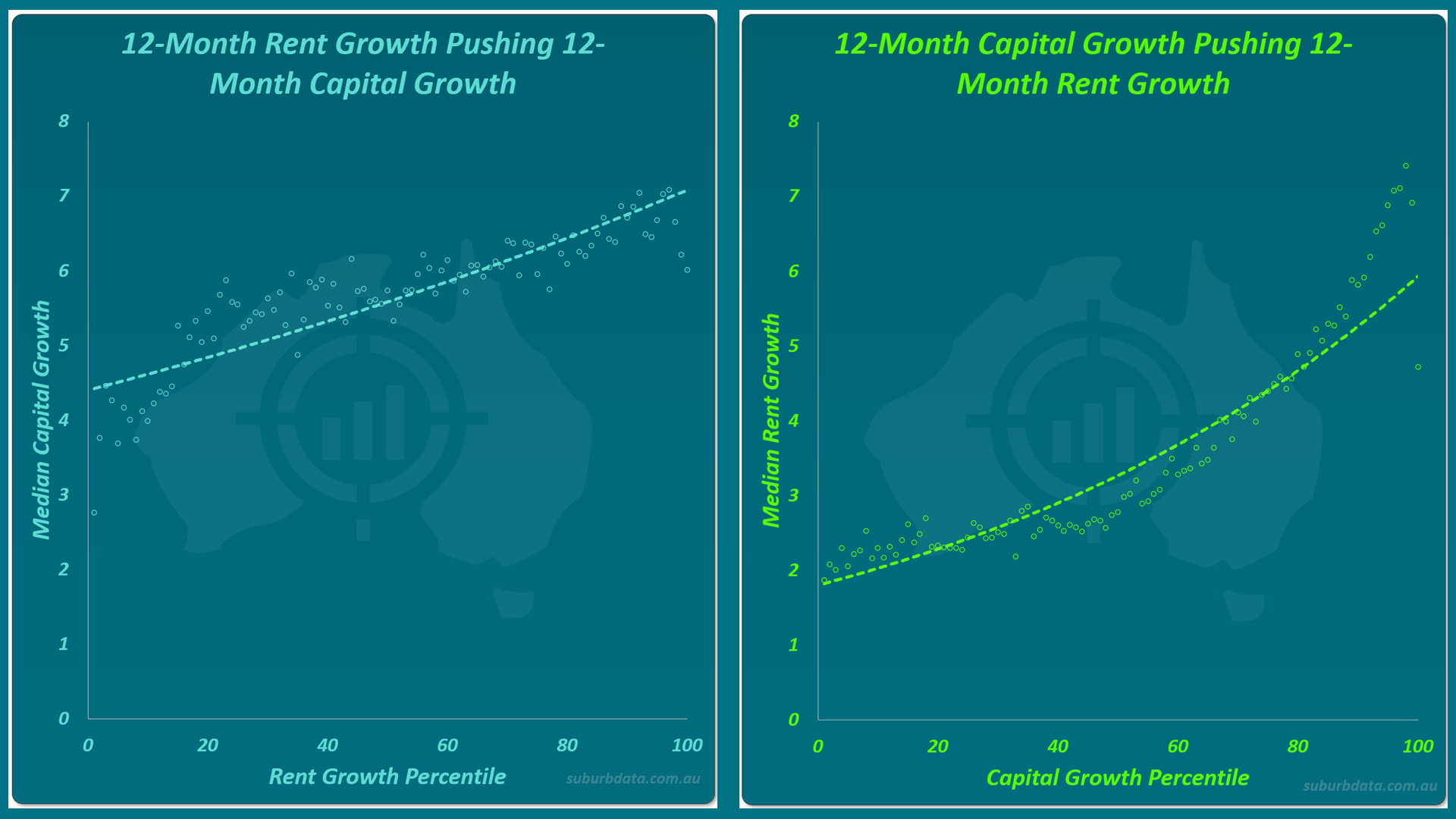
- Rent growth pushing capital growth: range from 4.5% to 7%. Spread of 2.5%.
- Capital growth pushing rent growth: range from 2% to 6%. Spread of 4%.
The lime trend line is steeper. Capital growth has more influence on rent growth than rent growth has on capital growth.
This is why a combined focus on yield and growth usually favours growth.
A high yield market is one owner-occupiers do not want. Fewer settlers. More renters. The buyers are predominantly cashflow-focused investors. A smaller demographic pushing prices higher means less compounding.
Rising rents do not push prices up as much as rising prices push rents up.
When Yield is OK
There are two occasions when yield deserves priority.
The first is retirement. You need income to replace a 9-to-5 salary, and you probably have enough equity. Growth has done its work. Yield converts equity into income.
The second is serviceability. Investors who pick growth locations well often hit a wall where they have more equity than banks will lend against. The aim is the best growth location that is neutrally geared or just positive. A mortgage broker can advise on the yield required. Just enough to keep the lenders happy.
Outside those two cases, growth is the priority.
The Yield Context Ruler
To show why a yield focus is so limiting, we looked at the spread of yields across the Australian housing market.
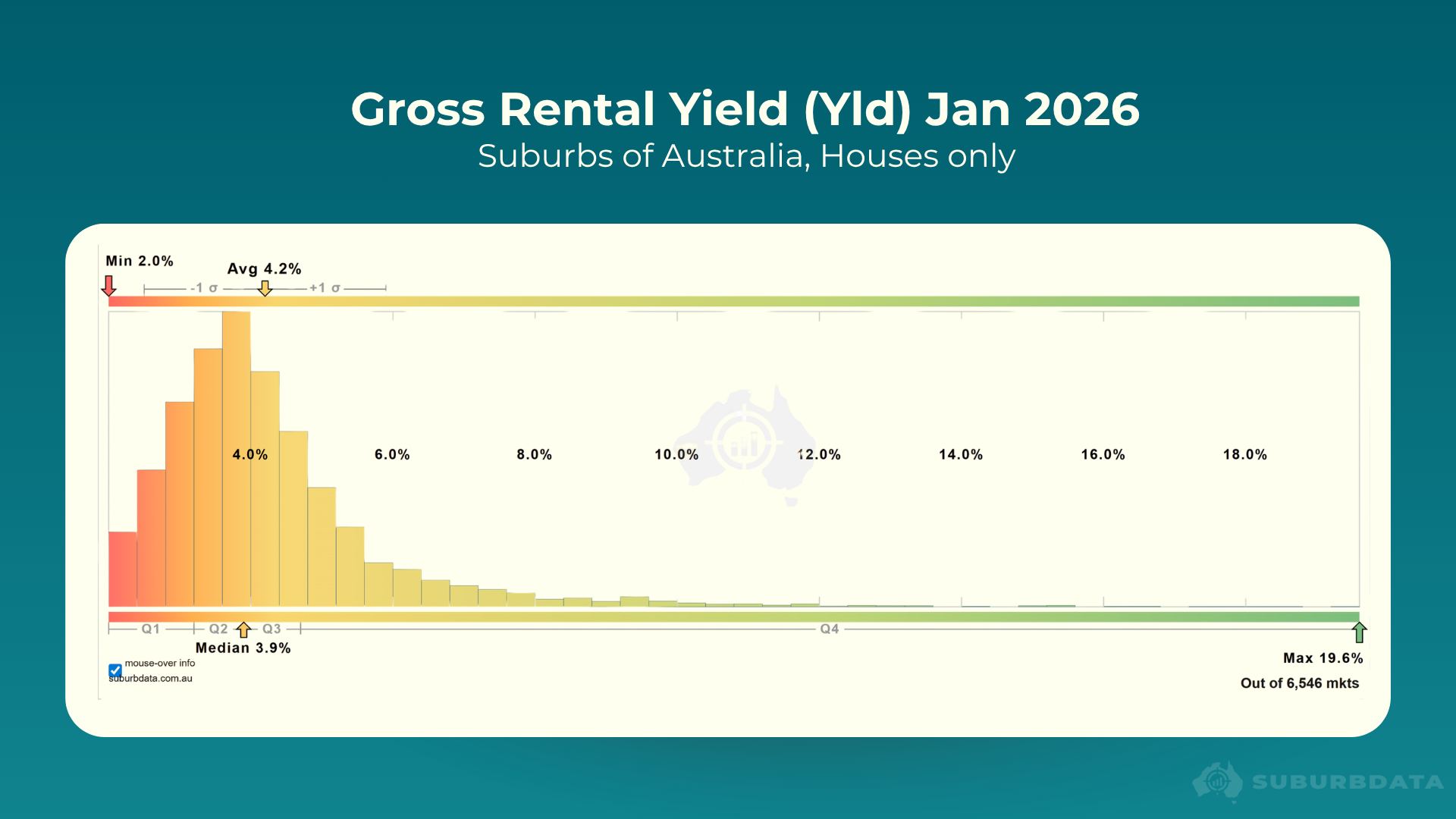
The chart is a Context Ruler, a SuburbData visualisation that shows the spread of values for a metric across the wider market.
- Sample: 6,546 suburbs, houses only, January 2026
- Median yield: 3.9%
- Average yield: 4.2%
- Most common yield band: 3.6% to 4%
- Maximum: 19.6% (likely an anomaly from short-stay listings or a small rental sample)
- Suburbs with yield above 6%: less than 10%
To get a cashflow positive property, you usually need a yield around 6% or higher. That rules out 90% of the Australian house market.
Some of the best growth locations in the country sit in that 90%. Their growth over the next few years could make 1% cashflow positive after tax look insignificant.
Yes, both high yield and reasonable growth are possible. But to get the best growth, you will probably have to sacrifice yield. And since growth trumps yield, a yield focus rules out the markets most likely to beat your high yield location overall.
This is the crux of why an obsession with yield harms wealth creation. To get high yield, you rule out a lot of better markets.
Conclusion
Keep the lid on yield. It does not compound the way growth does, and according to historical data, rising prices push rents harder than rising rents push prices.
There are two exceptions: retirement, and serviceability. Outside those, an obsession with yield harms wealth creation. A positive cashflow focus rules out 90% of the market on the Context Ruler, including most of the suburbs that would otherwise beat the high-yield ones pound-for-pound.
Capital growth is the ant's pants of property investing. Any distraction from a growth focus will likely reduce your rate of wealth creation.